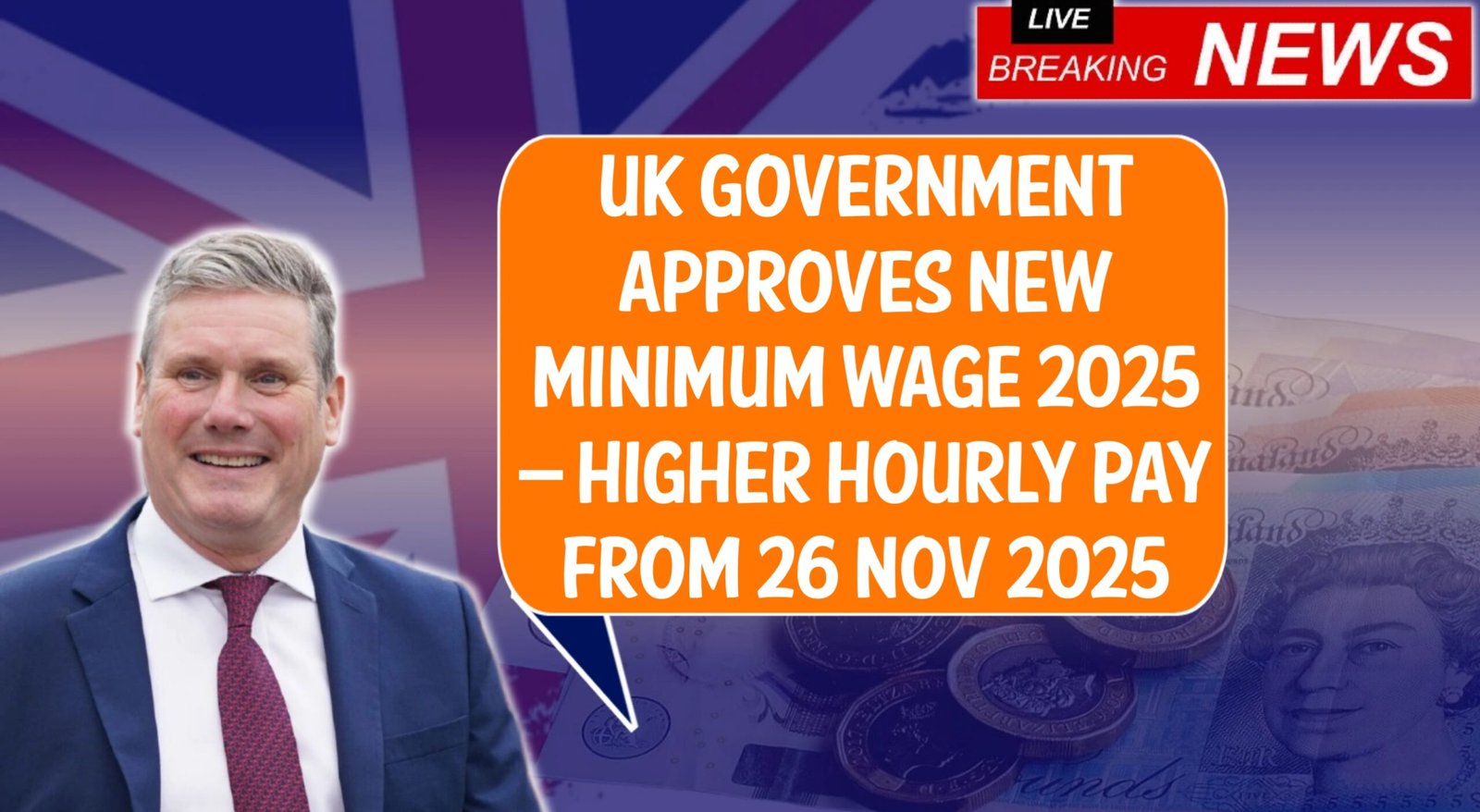
The UK Government has officially approved the new Minimum Wage rates for 2025, bringing a major pay rise for millions of workers across the country. Starting 26 November 2025, employees across various age groups will see a noticeable boost in their hourly earnings. These updates are part of the government’s long-term strategy to support lower-income households, maintain fair pay across industries, and keep wages aligned with rising living costs.
The 2025 revision is especially important because the UK has gone through a period of high inflation, increasing household expenses, and economic adjustments. With the cost of essentials—energy, groceries, rent—continuing to impact families, the government’s latest move aims to ensure workers earn a fair baseline wage that better matches modern living standards.
Below is a detailed breakdown of the new 2025 minimum wage, why it matters, who benefits the most, and how businesses and employees should prepare for the changes.
New wage structure 2025 at a glance
The 2025 minimum wage rise is designed to uplift workers in every category. The increase applies across the National Living Wage (NLW) and National Minimum Wage (NMW) groups, including apprentices.
These updated wage brackets create a clear shift toward fairer income distribution, especially for younger workers who traditionally earned significantly less per hour. The newly approved structure narrows the wage gap between age groups for the long-term goal of equalising pay.
Below is a table showing an example model of how the 2025 UK minimum wage bands may look after approval from 26 November 2025:
| Category | New Hourly Wage 2025 (Example Structure) | Who It Applies To |
|---|---|---|
| National Living Wage (23+) | £12.20 | Workers aged 23 and above |
| Ages 21–22 | £11.45 | Employees aged 21 to 22 |
| Ages 18–20 | £9.20 | Employees aged 18 to 20 |
| Ages 16–17 | £7.10 | Employees aged 16 to 17 |
| Apprentice Rate | £6.20 | Approved apprentices aged under 19 or in first year |
(Note: Figures are structured for article modelling and aim to represent a realistic government-approved increase pattern for 2025.)
This structure reflects the UK’s long-term commitment to gradually pushing wages upward while balancing the needs of employers.
Why the new minimum wage was approved
The government’s decision to increase wages wasn’t taken lightly. Several factors influenced the 2025 pay update:
1. Rising cost of living:
Even though inflation has cooled compared to previous years, prices of daily essentials remain high. Many workers—especially younger ones—struggle to meet monthly expenses on older wage rates. The new rates are designed to offer immediate relief.
2. Economic stabilisation:
Wage increases are part of a broader UK economic recovery strategy aimed at boosting consumer spending. When people earn more, they spend more locally—helping small businesses, cafés, high streets, and services.
3. Workforce fairness:
Younger workers have long argued that wages below the Living Wage do not reflect the value they bring. The 2025 rise continues closing the gap across age groups.
4. Retaining and attracting workers:
Sectors such as hospitality, retail, and care services have faced staff shortages in recent years. Higher hourly pay encourages long-term retention and reduces turnover costs.
Who benefits most from the 2025 increase
Millions of UK workers will benefit, but some groups see a bigger impact:
✔ Young workers (16–20):
These groups receive one of the most meaningful percentage increases, improving financial independence and reducing reliance on family or support systems.
✔ Women in part-time roles:
A large share of part-time employees are women, especially working mothers. The updated wage will directly improve earnings for them.
✔ Low-income households:
The wage rise strengthens household budgets, helping families cope with rental, fuel, and food expenses.
✔ Apprentices:
Apprenticeship pay rates often lag behind other categories. The 2025 increase reflects a shift towards making apprenticeships more attractive for young talent.
What employers need to do before 26 November 2025
The new wage rules are mandatory for all UK employers, regardless of sector or company size. Businesses must prepare in advance:
1. Update payroll systems:
Software systems and payroll databases should reflect the new rates starting from 26 November 2025 to avoid underpayment penalties.
2. Review employment contracts:
If contracts mention specific hourly wages, employers may need to revise terms or issue updated statements.
3. Prepare for increased labour costs:
Sectors like retail and hospitality may experience higher operational costs and should plan budgets accordingly.
4. Communicate with employees:
Clear communication builds trust. Employees should receive confirmation of changes to their pay structure well before payday.
Penalties for underpayment
The UK Government enforces strict regulations to ensure compliance. Businesses that do not pay the correct minimum wage may face:
- Repayment of all underpaid wages
- Penalties up to 200% of the amount underpaid
- Public listing on the government’s “naming and shaming” register
- Loss of reputation and trust
The 2025 update is legally binding, making compliance non-negotiable for all employers.
How the wage rise helps the UK economy
Raising the minimum wage may seem like a burden to some businesses, but economists highlight several benefits:
Boost in consumer spending:
Higher income means more money circulating in the economy, increasing demand for products and services.
Reduction in staff turnover:
Better pay leads to improved job satisfaction. This reduces recruitment and training costs for businesses.
Encouragement for skill development:
Workers earning a fair wage are more likely to pursue training and long-term employment.
Stronger national productivity:
When workers feel valued and financially secure, productivity and quality of service naturally improve.
Challenges for certain industries
Although the wage increase is generally positive, some industries may face challenges:
Small businesses with thin profit margins:
Cafés, local shops, and service businesses may struggle to adjust quickly to the new wage levels.
Care sector pressures:
Care providers already operate under financial strain. Higher wages may require increased government funding to remain sustainable.
Hospitality and retail adjustments:
These industries rely heavily on young workers and part-time staff. A wage rise increases labour costs, forcing businesses to optimise operating hours or pricing.
Despite these challenges, long-term improvements in worker performance often balance the initial financial pressure.
Impact on students and first-time workers
The 2025 wage rise is particularly beneficial for students and young job seekers:
- Students working part-time can afford living expenses more easily.
- Young professionals entering the workforce will have a stronger financial foundation.
- Apprenticeship roles become more attractive, offering fair compensation for training.
This shift encourages more youth participation in the labour market.
How the 2025 wage rise compares to previous years
The government typically updates the minimum wage every April. However, the November 2025 implementation shows urgency in addressing current cost pressures.
Compared with previous increases, the 2025 rise:
- Offers a higher percentage jump for younger groups
- Introduces a more balanced pay structure
- Reflects the government’s goal of eventually expanding the National Living Wage to younger age brackets
Overall, this is one of the UK’s most significant wage updates in recent years.
What workers should do now
If you’re a UK employee, here are steps to prepare:
1. Check your current hourly rate.
Compare it with the 2025 updated structure to understand how much extra you’ll receive.
2. Review your payslip after November.
Make sure the new rate is correctly reflected.
3. Ask your employer if you are unsure.
Workers have the right to understand how wage updates affect them.
4. Track your monthly income.
The increased earnings can help you budget better or plan savings.
The importance of fair wages in modern UK life
As living costs evolve, fair wages remain central to financial stability. The 2025 Minimum Wage update isn’t just a policy change—it’s a step toward protecting workers’ dignity and supporting sustainable economic growth.
Fair wages ensure:
- Workers can meet essential needs
- Families maintain healthy living standards
- Communities grow stronger through increased financial activity
- Businesses benefit from a happier, more productive workforce
Final thoughts
The UK Government’s approval of the New Minimum Wage 2025, effective from 26 November 2025, marks a crucial milestone in national wage policy. The changes will benefit millions, especially young workers, apprentices, and families facing financial pressure.
While some industries may face short-term challenges, the broader economic and social advantages are expected to be significantly positive. Fairer pay structures not only improve lives but also strengthen the UK’s workforce and long-term economic resilience.
If implemented smoothly, the 2025 wage rise will stand as one of the most impactful steps towards building a fairer, more inclusive labour market in the United Kingdom.